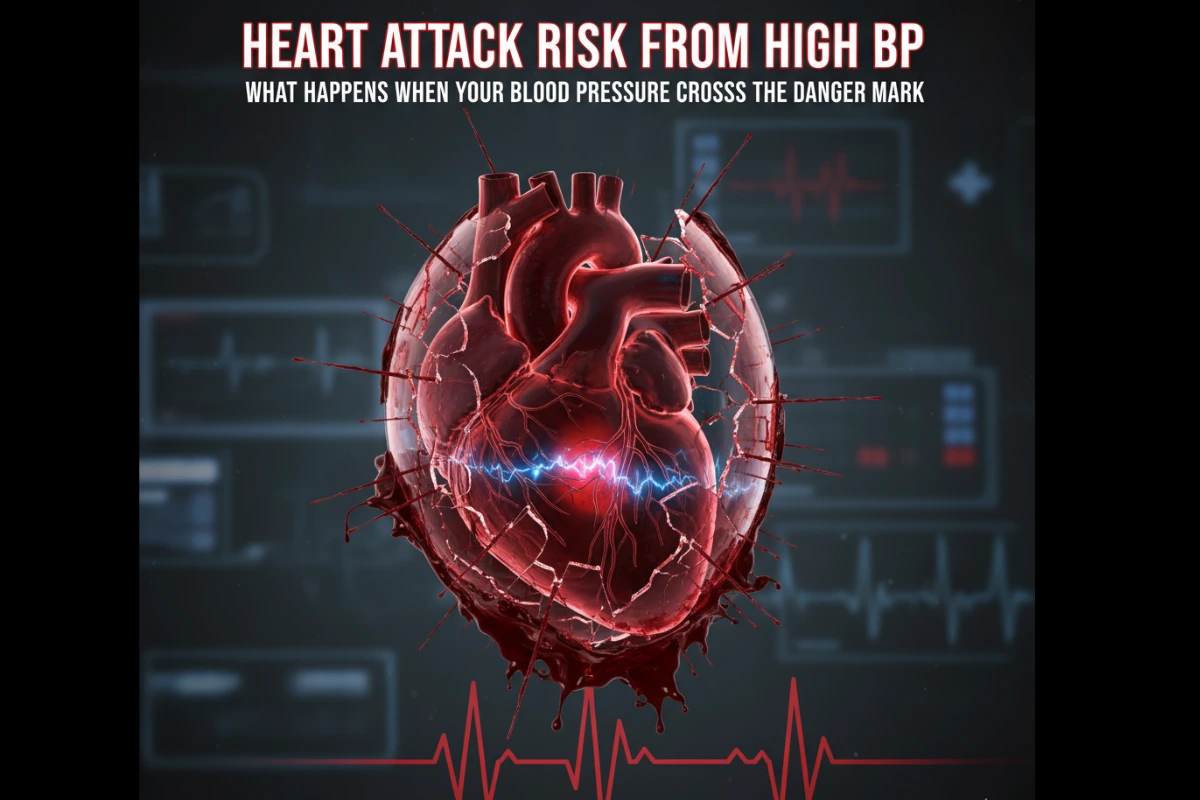
High blood pressure is one of the fastest-growing health concerns today, and doctors warn that it plays a critical role in triggering heart attacks. While most people know hypertension is harmful, the real question is: At what level does blood pressure become dangerous enough to cause a heart attack? To understand this connection, we consulted Dr. Amit Kumar Chaurasia, a senior cardiologist at Artemis Hospitals.
A heart attack, medically known as myocardial infarction, occurs when blood circulation to the heart muscle becomes blocked. Without adequate blood flow, heart tissues begin to die. Many factors can lead to this condition, but uncontrolled high blood pressure remains one of the strongest predictors.
Why High BP Becomes a Threat
When blood pressure consistently stays high, arteries experience excessive strain. This strain damages the inner lining of the blood vessels, causing them to become thick, narrow, and less flexible. As arteries lose their ability to carry oxygen-rich blood, the heart becomes stressed. Reduced blood supply eventually sets the stage for a heart attack.
Dr. Chaurasia explains that hypertension’s danger lies in its quiet progression. Most patients show no symptoms until a serious complication occurs.
BP Categories Explained
Here are the standard blood pressure categories:
-
Normal: 120/80 mmHg
-
Pre-Hypertension: 120–139/80–89 mmHg
-
Stage 1 Hypertension: 140–159/90–99 mmHg
-
Stage 2 Hypertension: 160/100 mmHg and above
The expert notes that anything above 140/90 mmHg should be considered a warning sign. Once BP enters this zone, the chances of a heart attack increase significantly. If readings reach 160/100 mmHg or higher, the risk becomes even more severe.
Also read: Best Fruits to Reduce Cholesterol Naturally | Healthy Choices
Watch Out for These Warning Signs
People with high blood pressure must remain attentive to potential symptoms of a cardiac emergency. Seek immediate help if you notice:
-
Chest tightness, pressure, or burning
-
Pain in the upper back, shoulders, or arms
-
Trouble breathing
-
Headache or dizziness
-
Excessive sweating
-
Nausea or discomfort in the stomach
-
Pain spreading to the neck or jaw
These symptoms may signal that a heart attack is already underway.
High blood pressure does not cause sudden damage—it builds up quietly over time. Regular monitoring, timely treatment, and lifestyle modifications like exercise, a balanced diet, and stress control can drastically reduce the risk of heart attacks.